Sea Animal with Chef Costume Cartoon Review
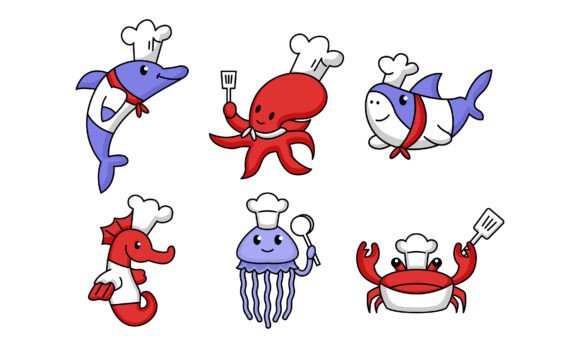
As a designer who has spent years translating digital art into tangible thread, I approach every new asset with a critical eye. When I first opened the file for Sea Animal with Chef Costume Cartoon, my initial reaction was a mix of amusement and professional curiosity. The concept is delightfully absurd: a marine creature donning a chef's hat and apron. It immediately signals a whimsical, playful mood that breaks away from traditional nautical themes. However, the product description also mentions a "Funny desert camel cartoon collection," which suggests this design is part of a broader, eclectic set of illustrations. For an embroidery business owner or Etsy seller, having access to such varied Graphics can be a goldmine for creating cohesive yet surprising collections.
The visual personality of the Sea Animal with Chef Costume Cartoon is bold and cartoonish. In the high-resolution PNG preview, the lines are clean, and the shapes are distinct. This is crucial when converting a raster image into a machine embroidery design. Complex gradients or tiny details often get lost in translation, turning into muddy patches of thread. Here, the design seems to rely on strong outlines and solid blocks of color, which typically translates well into fill stitch and satin stitch combinations. The character’s expression is friendly and inviting, making it an excellent candidate for personalized gifts or boutique merchandise where emotional connection drives sales.
Bringing the Character to Life on Fabric
To truly understand the potential of this design, I imagined a specific project: a custom embroidered tote bag for a local bakery that specializes in seafood-themed treats. The juxtaposition of a sea animal cooking fits perfectly with their brand identity. If I were to place the Sea Animal with Chef Costume Cartoon on a heavy cotton canvas tote, the large scale would allow the details of the chef's hat and apron to stand out clearly. The contrast between the bright colors of the cartoon and the neutral background of the bag would make the finished product pop off the shelf.
Another compelling use case is baby embroidery. Parents love unique, story-driven characters for nursery decor. A onesie or a soft pillow cover featuring this cheerful chef could become a favorite item. The rounded edges of the cartoon style are generally safe for baby items, avoiding sharp points that might irritate sensitive skin. However, as a reviewer, I must emphasize that the fabric choice matters immensely here. On a stretchy knit like a onesie, you need a stabilizer that holds up without adding bulk. The design's density will determine how much it distorts the fabric during stitching. If the fill stitch is too dense, the garment might pucker, ruining the professional look you are trying to achieve.
For small shop products, such as aprons for kitchen staff or holiday embroidery gifts, this design offers a conversation starter. Imagine a corporate gift box containing a high-quality sweatshirt with the Sea Animal with Chef Costume Cartoon stitched on the chest. It adds a layer of humor and personality that generic logos lack. The key is ensuring the embroidery file is optimized for the specific hoop size of your machine. If the design is intended for a 5x7 inch hoop but you try to force it into a smaller area, the details will collapse. Always check the dimensions before committing to a client order.
Navigating Technical Challenges and Fabric Textures
While the design looks promising, there are scenarios where caution is required. Textured fabrics like denim or thick fleece can sometimes interfere with the clarity of intricate details. If the Sea Animal with Chef Costume Cartoon features fine lines on the chef's uniform, those might get swallowed by the weave of a coarse fabric. In these cases, simplifying the design or increasing the stitch density slightly might be necessary to maintain definition.
Dark fabrics present another challenge. The vibrant colors of the cartoon need to stand out against black or navy backgrounds. You may need to add a layer of underlay or even consider an applique design technique where a piece of colored fabric forms the base, and the embroidery stitches outline the character. This not only saves on thread costs but also adds a tactile dimension to the finished product. Conversely, on light-colored fabrics, the running stitch used for outlining needs to be precise to prevent bleeding or fraying over time.
Curved surfaces, such as caps or hats, require special attention. The flat nature of the original illustration means it might not drape perfectly around the curve of a cap front without adjustment. The tension of the thread changes on curved surfaces, which can cause the design to ripple. Testing the design on scrap fabric that mimics the curvature of your final product is a non-negotiable step. If the Sea Animal with Chef Costume Cartoon is meant for a cap, ensure the top of the chef's hat doesn't get distorted by the seam of the hat panel.
Practical Notes for the Professional Maker
Before you commit this design to a commercial run, I strongly advise testing it on scrap fabric first. Check the thread color contrast to ensure readability from a distance. Review the stitch density; if it feels too tight, the fabric might tear during washing, which is a nightmare for customer trust. Confirm your hoop size matches the design dimensions to avoid clipping parts of the character. Inspect small details like the eyes or buttons on the chef's jacket to ensure they remain distinct after stitching.
It is also wise to test the design in black and white mockups. Sometimes, the color palette distracts from the actual shape and flow of the embroidery. Comparing the design on both light and dark fabric backgrounds will help you anticipate how customers will perceive the product in different lighting conditions. Use proper stabilizer appropriate for your fabric type; a cutaway stabilizer is often best for knits, while a tear-away works well for wovens.
Finally, always confirm licensing before selling finished items or digital products. While the product description mentions high-resolution PNG files, it does not explicitly state the terms for commercial embroidery use. As a craft business owner, you need to know if you can sell the physical embroidered goods or if you are restricted to personal use. Clarity here protects your business from legal issues down the road. The Sea Animal with Chef Costume Cartoon is a fun, versatile asset that can elevate your handmade presentation, but only if handled with the technical care it deserves.
In conclusion, this design brings a fresh, humorous energy to the world of embroidery. Whether you are creating a personalized gift, a custom apparel line, or a small shop product, the character's charm is undeniable. By respecting the technical requirements of machine embroidery—stitch density, stabilizer choice, and fabric compatibility—you can transform this digital illustration into a high-value, professional-grade finished product that delights your customers.