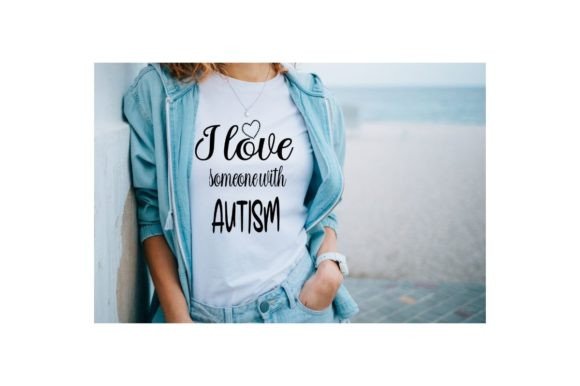
I Love Someone with Autism - Mom Life Design Review
As a designer who has spent years navigating the delicate balance between sentiment and stitch count, I approach every new machine embroidery design with a critical eye. When I first opened the file for I Love Someone with Autism - Mom Life, my immediate goal was to determine if this piece could translate from a digital preview into a high-quality, tangible product. This isn't just about whether the graphic looks good on a screen; it is about how it behaves under the needle, how it interacts with fabric texture, and whether it holds up as a professional asset for a craft business or a heartfelt handmade gift.
The Visual Weight and Emotional Resonance
The concept behind I Love Someone with Autism - Mom Life is inherently powerful. It taps into a specific community narrative that requires sensitivity in execution. Visually, the design presents itself as a strong single concept, which is ideal for custom apparel. The layout avoids the clutter often found in complex T-Shirt Designs, opting instead for a clear, readable statement. For an Etsy seller or boutique owner, clarity is currency. When a customer glances at a sweatshirt or a tote bag, they need to read the message instantly without squinting at tangled threads.
In terms of visual personality, the design strikes a tone that is both celebratory and supportive. It does not feel generic. However, the success of this embroidery project relies heavily on the execution of the lettering. In embroidery, typography can be the make-or-break element. If the font chosen for "Mom Life" or the autism awareness symbols relies too heavily on thin lines, it risks breaking during stitching or becoming illegible on textured fabrics like fleece or canvas. As a reviewer, I look for boldness in the stroke width to ensure the message survives the wash cycle and the wear of daily life.
Real-World Application: From File to Finished Product
Let's imagine a real-life scenario. You are preparing a holiday collection for your small shop. You decide to feature I Love Someone with Autism - Mom Life on a heavy-weight cotton hoodie. This is a classic use case for sweatshirt embroidery. The design needs to sit comfortably on the chest area without overwhelming the garment. Because this is a single concept, it pairs well with a simple color palette. I would recommend using high-contrast thread colors to make the text pop against the dark fabric of the hoodie. A metallic gold or a soft pastel blue for the accent elements could elevate the perceived value of the finished item immediately.
Alternatively, consider this design for a personalized gift, such as a kitchen towel or a pillow cover. Here, the fill stitch density becomes crucial. On softer items like pillows, you want the embroidery to have some give so it doesn't create a hard lump. If the stitch density in the file is too high, the fabric might pucker, ruining the drape of the material. Before committing to a full production run, I always test the design on scrap fabric that matches the final product's weight. This simple step saves hours of frustration and prevents wasted materials.
For those selling digital products, this design offers versatility. It works as a standalone embroidered patch design, which can be sewn onto denim jackets, backpacks, or even baby clothes. The "Mom Life" angle makes it particularly suitable for baby embroidery projects, perhaps on a onesie or a nursery blanket. However, when moving to smaller items like caps or hats, one must be cautious. Curved surfaces distort the perception of straight lines. A design that looks perfect flat on a table might appear warped on a cap brim unless the digitizer has accounted for the curve. Always check the mockups provided with the digital embroidery file to see how the text flows.
Navigating Technical Challenges and Fabric Limitations
While I Love Someone with Autism - Mom Life is versatile, it is not without its technical constraints. One area where designers must exercise caution is with stretchy fabrics. If you attempt to embroider this on a thin, jersey-knit t-shirt without proper stabilization, the tension from the needle can cause the fabric to ripple around the letters. This creates an unprofessional look that undermines the quality of the handmade product.
Using a high-quality stabilizer is non-negotiable here. For stretchy knits, a cut-away stabilizer is usually the best choice to support the stitches over time. For woven fabrics like tote bags or aprons, a tear-away might suffice, but only if the hoop size allows for tight tension without distorting the weave. Speaking of hoops, ensure your machine's hoop is large enough to accommodate the entire design without having to re-hoop in the middle of the stitching process. Re-hooping can lead to misalignment, especially if the design includes multiple colors or intricate details.
Another consideration is the background color of the garment. If you are working with dark fabrics, you may need to add a layer of underlay or a backing film to prevent the thread from blending into the shirt. Light fabrics generally require less preparation, but the contrast ratio still matters. Test the design in black and white mockups before purchasing thread. This helps you visualize the negative space and ensures that the running stitch outlines and satin stitch fills will remain distinct.
Business Value and Commercial Viability
For the creative entrepreneur, the commercial viability of I Love Someone with Autism - Mom Life is significant. There is a consistent demand for awareness-themed merchandise, particularly during April (Autism Awareness Month) and the holidays. This design fits perfectly into a strategy for commercial embroidery aimed at raising funds or building brand loyalty within niche communities. When customers see a well-executed version of this design on a high-quality tote bag design or a cozy blanket, they perceive it as a thoughtful, premium item rather than a mass-produced commodity.
However, trust is built on consistency. If you sell this as part of your small shop product line, every single item must look identical. Variations in thread tension or slight shifts in placement can damage your reputation. I strongly advise creating a standard operating procedure for this specific design: define the exact thread colors, specify the type of stabilizer, and set the precise hoop size for each garment type. Documenting these steps ensures that your finished product maintains the same level of quality whether it is the first item you make or the hundredth.
Final Designer Notes for Success
- Test First: Never skip the test run on scrap fabric. Check for puckering, skipped stitches, or thread breakage.
- Check Licensing: Before selling any personalized gift or custom apparel featuring this design, confirm the licensing terms. Ensure you are permitted to sell finished goods containing this specific graphic.
- Contrast Matters: Choose thread colors that stand out clearly against your fabric base to maximize readability and visual impact.
- Stabilize Properly: Use the correct stabilizer for the fabric type to prevent distortion, especially on stretchy or thin materials.
- Mockup Wisely: Use printable mockups to show potential buyers exactly how the design looks on different products like mugs, wall mats, or drink ware.
In conclusion, I Love Someone with Autism - Mom Life is a robust design asset that, when handled with care and technical precision, can result in beautiful, meaningful products. It bridges the gap between artistic expression and functional craftsmanship. Whether you are a hobbyist making gifts for family or a business owner scaling your inventory, paying attention to the details of digitizing, stabilizing, and placement will ensure that this design shines in every application. It is more than just a graphic; it is a statement of love and understanding, stitched with purpose.