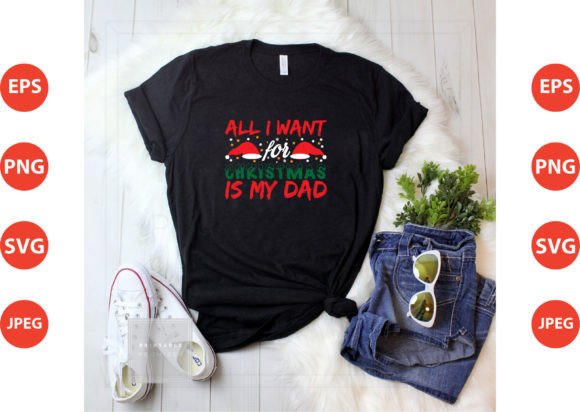
All I Want for Christmas is My Dad: A Designer Review
As a professional who has spent years navigating the intersection of digital graphics and physical thread, I approach every new asset with a critical eye. The market is flooded with T-Shirt Designs, but finding one that translates well from a screen to a finished embroidery project requires careful scrutiny. Today, I am evaluating the design titled All I Want for Christmas is My Dad. This piece promises to be a staple for holiday collections, but does it hold up under the pressure of real-world stitching? Let’s dive into how this graphic performs when we move beyond the digital preview and onto actual fabric.
First Impressions: Mood and Visual Weight
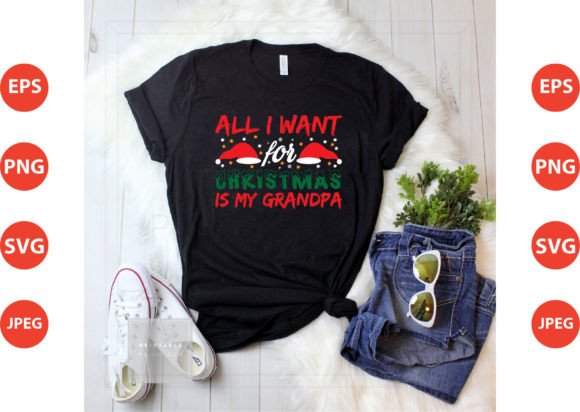
At first glance, All I Want for Christmas is My Dad exudes a warm, nostalgic sentiment that resonates deeply during the holiday season. The layout feels balanced, avoiding the cluttered look that plagues many seasonal Graphics. When reviewing a machine embroidery design, I immediately assess the negative space and the flow of the lines. Here, the typography appears robust enough to handle fill stitches without becoming muddy, while the accompanying iconography—likely a stocking, gift, or similar motif—seems designed with clear boundaries.
This visual personality suggests the design is versatile. It isn't just a novelty print; it has the structural integrity to work as a focal point on heavier garments or a charming accent on smaller items. For an Etsy seller or small shop owner, this kind of clarity is vital. Customers buying a personalized gift need to see crisp details, not tangled threads. The high resolution mentioned in the product description, specifically the 4500×5400 PNG file, indicates that the source art is sharp, which is a good starting point for digitizing if you are creating your own digital embroidery file from scratch.
Real-World Application: From Hoop to Home
To truly understand the value of All I Want for Christmas is My Dad, imagine a specific scenario: preparing a custom embroidered tote bag for a boutique client. You want something that feels premium yet accessible. Placing this design on a sturdy canvas tote creates an immediate connection. The text is legible even from a distance, making it perfect for a "carry-out" item at a craft fair.
Now, consider a sweatshirt. Holiday embroidery on fleece or cotton blends can be tricky due to fabric texture. However, the bold nature of this phrase suggests it would sit well on a chest pocket or centered on the back of a crewneck. If you were to use satin stitch for the lettering and fill stitch for any decorative elements, the contrast against a dark navy or forest green sweatshirt would be striking. This is exactly the kind of custom apparel that drives sales for handmade product shops during November and December.
I also envision this working beautifully as an embroidered patch. Many crafters prefer to create patches in bulk and then attach them to denim jackets, caps, or pillow covers. Because the design likely features distinct shapes, it would cut cleanly from the backing material. This versatility allows a craft business to diversify their inventory without needing to re-digitize the artwork for every single product type.
Baby Items and Nursery Decor
While the title mentions "Dad," the aesthetic is soft enough to adapt for baby clothing. Imagine a onesie or a nursery blanket where the design is slightly scaled down. The key here is checking the stitch density. If the original vector files (EPS or SVG) are clean, you can reduce the scale without losing the definition of the letters. However, caution is needed with tiny lettering on stretchy fabrics like jersey knit used for baby clothes. Always test the design on scrap fabric first to ensure the stabilizer supports the stretch without distorting the text.
Navigating Technical Challenges
Even the best Graphics have limitations. When using All I Want for Christmas is My Dad for commercial embroidery, there are specific areas where you must exercise care. First, consider the hoop size. If you are attempting to fit this design into a very small 4x4 inch hoop, you might find the lettering too dense. Crowding the needle increases the risk of thread breakage and puckering. Always confirm the maximum dimensions recommended by the digitizer before you commit to a project.
Fabric choice is another critical factor. On textured fabrics like chenille or heavy corduroy, fine details can get lost. The thick strokes of this design should generally handle texture well, but avoid placing it on highly patterned backgrounds where the thread colors might clash visually. Similarly, on thin fabrics, the weight of the fill stitch could cause sagging. Using a proper stabilizer is non-negotiable here. Tear-away works for stable fabrics, but for stretchy knits, a cut-away stabilizer will maintain the shape of the design over time.
Dark fabrics present a unique challenge. While the design looks great on black mockups, the reality of stitching white thread on black fabric often requires a light underlay to prevent the background color from showing through the gaps in the stitches. Before running a full production batch, create a printable mockup in black and white to check the contrast. This simple step can save hours of rework and wasted thread.
Impact on Brand and Customer Trust
For a creative entrepreneur, the quality of your finished product directly impacts your brand consistency. A sloppy execution of a popular phrase like All I Want for Christmas is My Dad can damage customer trust. Conversely, a perfectly stitched version elevates the perceived value of the item. When customers see a professional finish, they are more likely to return for future personalized gifts.
The availability of multiple file formats—EPS, SVG, and PNG—adds significant value for those selling digital assets. If you are a designer offering this as a downloadable product, ensuring these files are vector-perfect is crucial. Clients who purchase these design assets expect them to be ready for sublimation, laser cutting, or embroidery. The 4500×5400 pixel PNG ensures that even large format prints remain crisp, which is essential for things like banners or large tote bags.
Practical Designer Notes for Success
If you decide to incorporate All I Want for Christmas is My Dad into your workflow, follow these practical steps to ensure success:
- Test on Scrap Fabric: Never skip the test run. Stitch the design on a scrap piece of the exact fabric you plan to use. Check for puckering, skipped stitches, or thread tension issues.
- Review Thread Colors: Experiment with different thread palettes. Sometimes swapping a standard red for a burgundy or a bright green for a sage can make the design feel more sophisticated.
- Check Licensing: Before selling finished items or the digital files themselves, confirm the licensing terms. Ensure you have the right to use this design for commercial embroidery projects.
- Inspect Small Details: Zoom in on the vector files to ensure there are no stray anchor points or closed paths that could confuse your embroidery software during conversion.
- Use Proper Stabilizer: Match your stabilizer to the fabric weight. A heavy-duty cut-away is often better for holiday wearables that will undergo frequent washing.
In conclusion, All I Want for Christmas is My Dad is a strong contender for your holiday collection. Its clear layout and emotional resonance make it a favorite for handmade products ranging from sweatshirts to kitchen towels. By paying attention to stitch density, fabric choice, and stabilization, you can transform this digital graphic into a tangible, high-quality keepsake that customers will cherish. Whether you are a hobbyist making gifts for family or a business owner stocking shelves for the holidays, this design offers the flexibility and charm needed to stand out in a crowded market.